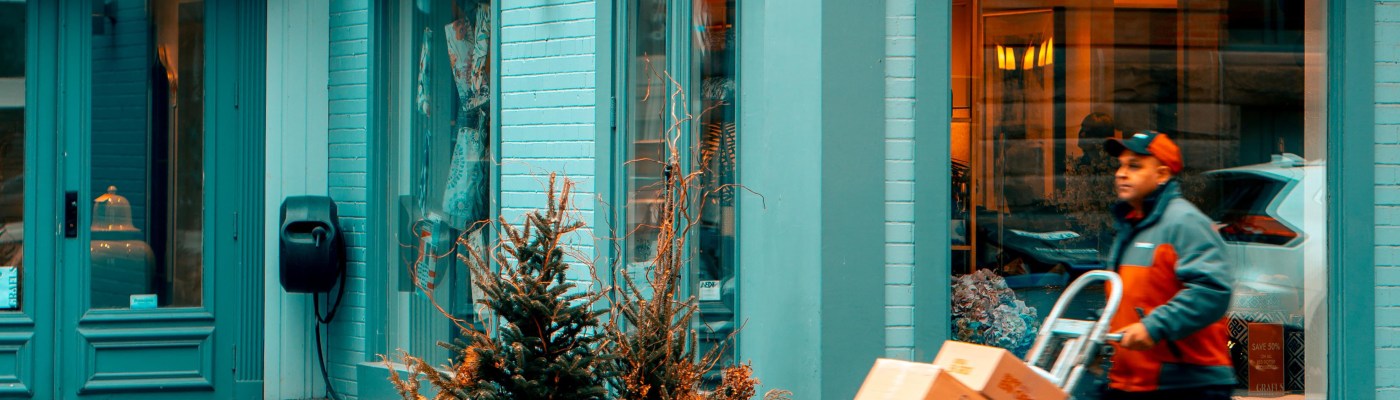

Image courtesy of Sunyo Kim via Pexels
The internet, or the World Wide Web (www.) as it is often referred, has been available to the public since the early 1990s (https://www.pewresearch.org/internet/2014/03/11/world-wide-web-timeline/). According to Pew Research Center, in 1993, “CERN places its World Wide Web technology in the public domain, donating it to the world.” Since that time, there have been many advancements in technology that have allowed for easier business transactions. For example, home computers, mobile devices, apps, and social media, to name a few. The internet fueled all of the previously mentioned technologies. Along with all the advancements, a different standard of expectations from consumers developed.
Kate Rooney of CNBC (https://www.cnbc.com/2019/04/02/online-shopping-officially-overtakes-brick-and-mortar-retail-for-the-first-time-ever.html) recently reported;
In February, online sales narrowly beat general merchandise stores, including department stores, warehouse clubs, and super-centers. Non-store retail sales last month accounted for 11.813 percent of the total, compared with 11.807 percent for general merchandise. To be sure, brick-and-mortar sales are higher when including other categories such as auto and restaurant sales.
It appears convenience reigns supreme overall, except with auto dealerships and restaurants. That is because cars are too big for delivery, or once used to be (https://www.carvana.com). Carvana is a site where consumers can purchase automobiles. Unlike other automobile platforms, Carvana can deliver the car directly to the customer. Another differentiator is that Carvana allows consumers to return the vehicle if they are dissatisfied. Their tagline, “Buy online. Get it delivered. Love it or return it,” and their slogan “The new way to buy a car” are both quite impressive. As for restaurants, its only saving grace is that it doubles as neutral socializing ground, such as dates and social gatherings.
Consumers have an insatiable palate towards instant gratification. Target and Walmart have doubled their stores to serve as fulfillment centers to combat e-commerce giant – Amazon (https://www.forbes.com/sites/panosmourdoukoutas/2019/10/26/walmart-and-target-have-changed-the-game-for-amazon/#7616d6c51246). All three offer same-day delivery options. What’s next on the horizon for e-commerce, maybe instant delivery. Products delivered through a machine, in the customer’s home, connected to the internet. I know it sounds crazy, but look how cheap 3D printers have gotten in recent years (https://all3dp.com/1/best-cheap-budget-3d-printer-affordable-under-500-1000/).
In summation, the only advantage today to having products in a brick-and-mortar store is easy distribution to local consumers. The expenditures associated with these buildings are enormous, and customer behavior does not reflect a positive return on investment. The exceptions to this theory will be facilities that offer consumers more than just products. They will need to provide customers with an experience. For all the reasons mentioned above, the largest mall in the United States, which opened recently – The American Dream – promises customers an experience (https://www.americandream.com). Far more than what traditional brick-and-mortars offer.
 Venturedove.com